 +91 919718044428
 rohitgpt18@gmail.com






 Thrombolysis in Acute Stroke
  Botolinum Toxin Injection
  Myasthenia Gravis
  Spine Disorders
  Migraine/Headache
  Epilepsy
  Stroke Paralysis
  Parkinson’s disease
  Multiple Sclerosis
  NeuroInfections
  Brain Tumor
  Alzheimer’s Disease
  Back Pain
  Dementia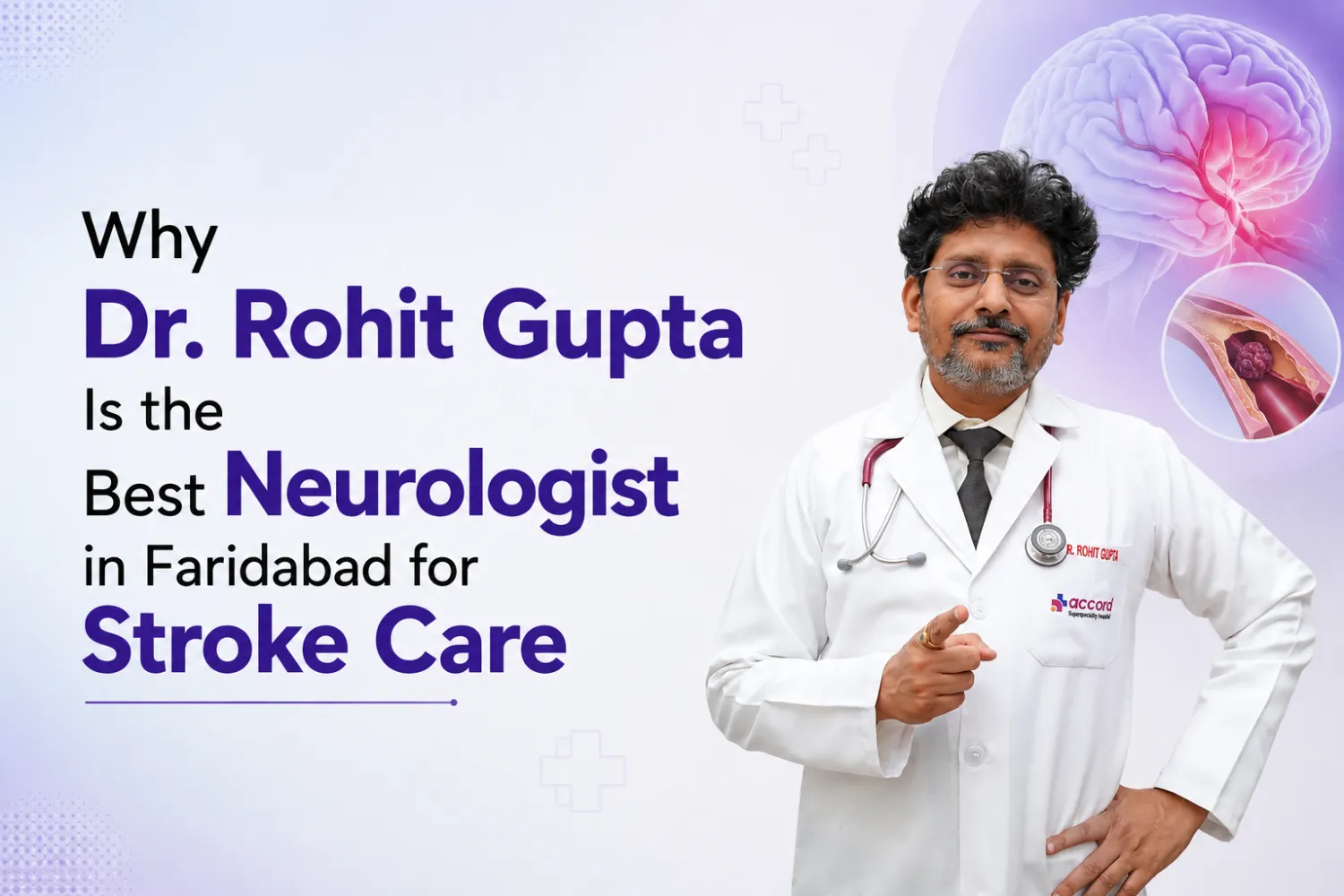
Posted By: Dr. (Prof.) Rohit Gupta on 07 Aug 2026
When it comes to stroke, one fact matters more than almost anything else: time. Brain cells begin dying within minutes of blood supply being cut off, and the window for the most effective treatments is measured in hours, not days. This is why, when searching for the best neurologist in Faridabad for stroke care, experience with time-critical treatment — not just general neurology knowledge — makes the real difference between a full recovery and permanent disability.
This is precisely the area where Dr. Rohit Gupta, Chairman of Neurosciences at Accord Superspeciality Hospital, Faridabad, has built one of the strongest track records in the region.
Why Stroke Care Requires a Specialist, Not Just Any Physician
Stroke is a medical emergency, and its management is highly time-sensitive and technically demanding. The single most effective treatment for an eligible ischaemic stroke patient — thrombolysis, commonly known as “clot-busting” therapy — must typically be administered within a narrow window from symptom onset. Recognising eligibility quickly, weighing risks accurately, and administering the right treatment without delay requires a neurologist who has done this many times before, under real emergency pressure.
A general physician or even a non-specialised doctor may hesitate, refer, or delay — and in stroke care, delay is often the single biggest driver of poor outcomes. This is why access to an experienced, decisive stroke specialist within your city genuinely changes outcomes for patients and families.
What Makes Dr. Rohit Gupta Stand Out in Stroke Care
1. Among the Highest Volumes of Thrombolysis in North India
Dr. Gupta introduced the concept of thrombolysis for stroke and paralysis patients in the region over a decade ago, and has since thrombolysed more than 750 stroke patients — a volume recognised as among the highest in North India. This isn’t a theoretical familiarity with the treatment; it reflects genuine, repeated, high-stakes clinical experience in the exact scenario where speed and judgment matter most.
2. Advanced, Formal Training in Neurology
Dr. Gupta holds an MBBS from Pt. B D Sharma Postgraduate Institute of Medical Sciences, Rohtak, an MD (Gold Medallist) from S N Medical College, Agra, and a DM in Neurology from Seth GS Medical College and KEM Hospital, Mumbai — one of India’s most respected centres for advanced neurology training. This level of formal subspecialty training is the foundation that supports rapid, accurate decision-making during a stroke emergency.
3. Chairman-Level Leadership of a Dedicated Neurosciences Department
As Chairman of Neurosciences at Accord Superspeciality Hospital, Dr. Gupta doesn’t just treat stroke patients individually — he oversees the systems, protocols, and team coordination that stroke care depends on. Effective stroke treatment isn’t a solo effort; it requires rapid imaging, lab coordination, and a team ready to act within minutes of a patient’s arrival. Departmental leadership at this level typically reflects — and reinforces — exactly this kind of preparedness.
4. Experience Across the Full Stroke Care Continuum
Beyond acute emergency treatment, Dr. Gupta’s practice covers the full arc of stroke-related care, including:
- Rapid assessment and eligibility screening for thrombolysis
- Management of both ischaemic and haemorrhagic stroke
- Post-stroke complication management
- Secondary stroke prevention — identifying and managing risk factors to reduce recurrence
- Coordination of rehabilitation planning for recovering patients
5. A Track Record Recognised Well Beyond Faridabad
Dr. Gupta’s experience — including thrombolysing one of the highest patient volumes in North India — has established him as a recognised authority in stroke care in the region, drawing patients not just from Faridabad but from surrounding areas seeking a specialist with genuine emergency stroke expertise.
Understanding Stroke: Why Every Minute Matters
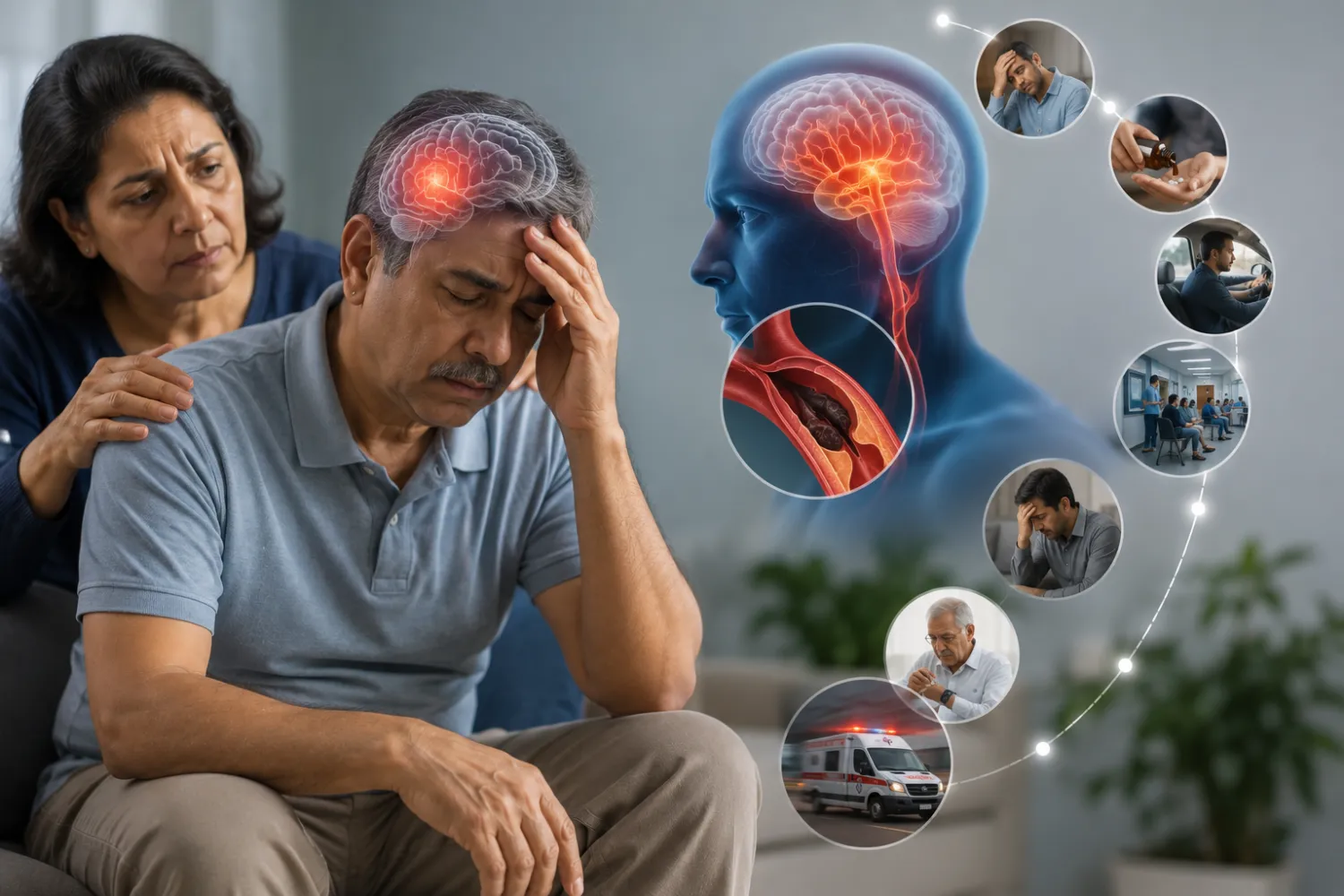
A stroke occurs when blood supply to part of the brain is interrupted, either by a blocked blood vessel (ischaemic stroke, the most common type) or a burst blood vessel (haemorrhagic stroke). Without oxygen, brain cells begin to die rapidly — which is why stroke care is often summarised by the phrase “time is brain.”
Recognising the warning signs quickly can be the difference between full recovery and lasting disability. Common signs include:
- Sudden weakness or numbness, especially on one side of the face, arm, or leg
- Sudden confusion, difficulty speaking, or trouble understanding speech
- Sudden trouble seeing in one or both eyes
- Sudden difficulty walking, dizziness, or loss of balance and coordination
- Sudden, severe headache with no known cause
If you or someone with you experiences any of these symptoms, the appropriate response is to seek emergency medical care immediately — not to wait and see if symptoms improve on their own.
What Happens During Emergency Stroke Treatment
When a stroke patient arrives promptly at a hospital equipped for emergency neurology care, the process typically involves:
- Rapid clinical assessment to confirm stroke and estimate time of symptom onset
- Urgent brain imaging (CT or MRI) to determine the type of stroke and rule out contraindications to treatment
- Eligibility assessment for thrombolysis — a time-critical decision requiring both clinical judgment and speed
- Administration of clot-dissolving medication, if eligible and within the appropriate time window
- Close monitoring in the hours following treatment
- Planning for rehabilitation and secondary prevention, once the patient is stabilised
Reducing Your Risk of Stroke
While emergency care is critical once a stroke occurs, many strokes are also preventable through proactive management of known risk factors, including:
- High blood pressure
- Diabetes
- High cholesterol
- Smoking
- Atrial fibrillation and other heart rhythm disorders
- Sedentary lifestyle and obesity
If you have any of these risk factors, or a family history of stroke, a proactive consultation with a neurologist can help assess and manage your individual risk before an emergency occurs.
Frequently Asked Questions
How quickly must thrombolysis be given after a stroke? Thrombolysis is generally most effective within a defined early window from symptom onset, which is why immediate emergency care is critical — every minute of delay can reduce eligibility and effectiveness.
Is thrombolysis suitable for every stroke patient? No — eligibility depends on several factors, including the type of stroke, time since onset, and other individual health considerations. This is precisely why rapid assessment by an experienced stroke specialist matters.
Can a person fully recover from a stroke? Many patients, especially those treated promptly, can achieve significant or even full recovery. Outcomes depend heavily on the type and severity of stroke, how quickly treatment was received, and the rehabilitation that follows.
What should I do if I suspect someone is having a stroke? Do not wait for symptoms to pass — seek emergency medical care immediately. Note the time symptoms began, as this information is critical for treatment decisions.
Book a Consultation With Dr. Rohit Gupta
Whether you’re seeking proactive stroke risk assessment, post-stroke follow-up care, or a specialist for a family member recovering from a stroke, Dr. Rohit Gupta brings one of the region’s strongest track records in stroke treatment. He consults at Accord Superspeciality Hospital, Faridabad.
Book an appointment with Dr. Rohit Gupta to discuss stroke risk, prevention, or ongoing neurological care.


 Book an Appointment