 +91 919718044428
 rohitgpt18@gmail.com






 Thrombolysis in Acute Stroke
  Botolinum Toxin Injection
  Myasthenia Gravis
  Spine Disorders
  Migraine/Headache
  Epilepsy
  Stroke Paralysis
  Parkinson’s disease
  Multiple Sclerosis
  NeuroInfections
  Brain Tumor
  Alzheimer’s Disease
  Back Pain
  Dementia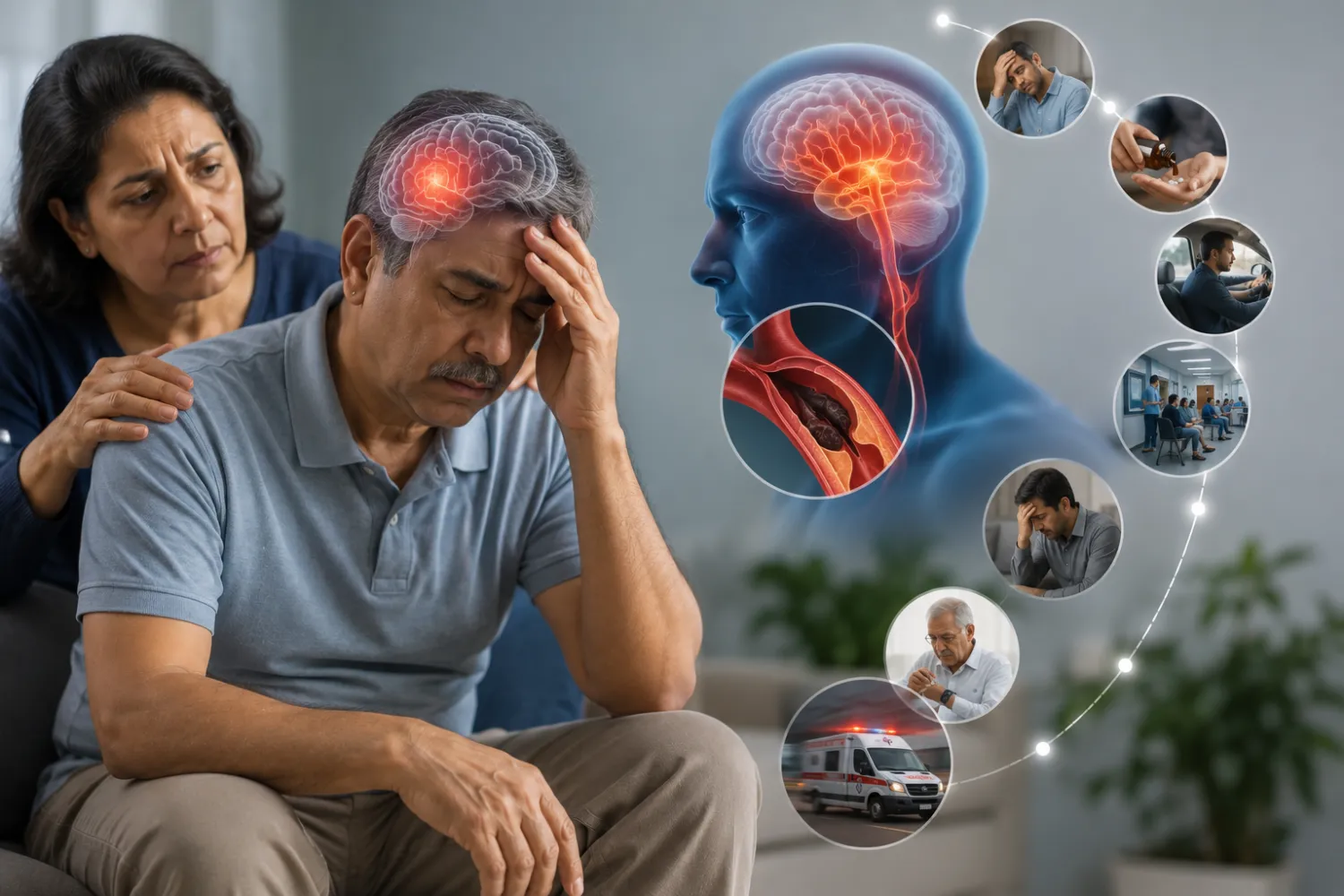
Posted By: Dr. (Prof.) Rohit Gupta on 14 Jul 2026
Every minute matters during a stroke. This isn’t just a medical phrase that doctors repeat—it is a reality I witness regularly. In my practice as a neurologist, I have met countless families who later tell me, “Doctor, we thought it would get better on its own.” Others admit they waited for a family member to come home, visited a local clinic first, or tried home remedies before reaching a hospital.
Unfortunately, the brain doesn’t wait.
During an acute stroke, nearly 1.9 million brain cells can be lost every minute if blood flow is interrupted. The sooner treatment begins, the better the chances of preserving brain function and reducing permanent disability.
One of the most frustrating aspects of stroke care is that many complications are preventable—not because we lack treatment, but because patients reach us too late.
Over the years, I have noticed several common mistakes that repeatedly delay life-saving treatment. If more people understood these mistakes, many stroke outcomes could be significantly improved.
Here are the seven most common ones.
1. Waiting to See If the Symptoms Improve
This is by far the most common mistake.
A person suddenly develops weakness in one arm, difficulty speaking, facial drooping, or blurred vision. Instead of seeking emergency care, the family decides to “wait for an hour.”
Sometimes the symptoms partially improve.
That often creates a false sense of security.
However, temporary improvement does not mean the problem has resolved.
In many cases, it may represent a Transient Ischemic Attack (TIA)—often called a “mini stroke.” A TIA is an important warning sign that a major stroke may follow within hours or days if the underlying cause is not addressed.
Whenever stroke symptoms appear—even if they disappear—you should seek immediate medical evaluation.
2. Assuming It Is Just High Blood Pressure or Weakness
Many patients already have hypertension.
When they suddenly feel dizzy or weak, they often assume their blood pressure is the only issue.
Some check their BP repeatedly instead of recognising the neurological symptoms.
Others blame fatigue, dehydration, cervical spondylosis, or low blood sugar.
While these conditions can cause dizziness or weakness, sudden one-sided weakness, slurred speech, facial asymmetry, or loss of coordination should never be ignored.
Stroke should always remain a possibility until proven otherwise.
3. Driving Yourself to the Hospital
I frequently ask patients how they reached the hospital.
Many tell me they drove themselves or came on a two-wheeler.
This is extremely risky.
Stroke symptoms can worsen rapidly.
Patients may suddenly lose consciousness, develop seizures, or lose control over one side of the body while driving.
Whenever stroke is suspected, call emergency medical services or arrange immediate transportation with another responsible adult.
Reaching the right hospital safely is more important than trying to save a few minutes by driving yourself.
4. Visiting Multiple Clinics Before Reaching a Stroke Centre
This is another delay I often see.
The patient first visits a nearby clinic.
Then another hospital.
Then gets referred elsewhere.
By the time they reach a comprehensive stroke centre, valuable treatment time has already been lost.
Modern stroke treatment depends heavily on timing.
Certain clot-busting treatments and advanced neurointerventional procedures are effective only within specific time windows after symptom onset.
Every unnecessary stop delays definitive care.
Whenever stroke is suspected, patients should be taken directly to a hospital equipped to manage acute stroke emergencies.
5. Ignoring Mild Symptoms
Many people believe stroke always causes complete paralysis.
That isn’t true.
Some patients only notice:
- Slight slurring of speech
- Mild numbness
- Temporary blurred vision
- Difficulty finding words
- Weakness in one hand
- Sudden imbalance
Because these symptoms seem minor, families often postpone evaluation.
Ironically, these “small” warning signs may be the earliest opportunity to prevent a larger stroke.
One of the most important lessons I try to teach patients is this:
A mild stroke is still a stroke.
Never judge the seriousness of a stroke by how dramatic the symptoms appear.
6. Taking Medicines Without Medical Advice
Occasionally patients take painkillers, blood pressure tablets, or even blood-thinning medicines before seeing a doctor because they assume it will help.
This can be dangerous.
Not all strokes are caused by blocked arteries.
Some strokes occur because of bleeding inside the brain.
Treatment for these two conditions is completely different.
Giving the wrong medication before proper brain imaging can sometimes worsen the situation.
That is why accurate diagnosis comes first.
Treatment decisions should always follow appropriate clinical evaluation and imaging.
7. Not Knowing the Exact Time Symptoms Started
This may seem like a small detail, but it is one of the first questions every stroke specialist asks.
“When was the patient last seen completely normal?”
Families often answer:
“I’m not sure.”
“Maybe sometime this morning.”
“He was sleeping.”
Unfortunately, stroke treatment depends on knowing the approximate onset time.
Even if the patient wakes up with symptoms, knowing when they were last normal helps determine treatment options.
Whenever possible, note the exact time symptoms began or the last time the person was seen without symptoms.
That information may directly influence treatment decisions.
Why Time Matters So Much
Many people have heard the phrase:
Time is Brain.
It is one of the most accurate statements in neurology.
The longer the brain remains deprived of blood supply, the greater the risk of permanent disability.
Fortunately, advances in stroke care have dramatically improved outcomes.
Today, selected patients may benefit from:
- Intravenous thrombolysis (clot-dissolving medication)
- Mechanical thrombectomy
- Advanced brain imaging
- Comprehensive stroke unit care
- Early rehabilitation
However, these treatments are only possible when patients reach the hospital without unnecessary delay.
The FAST Rule Everyone Should Remember
Whenever I speak at public awareness programmes, I encourage people to remember the FAST acronym.
F – Face
Ask the person to smile.
Is one side drooping?
A – Arm
Can they raise both arms equally?
S – Speech
Is speech slurred or difficult to understand?
T – Time
Call emergency medical services immediately.
Do not wait.
Stroke Doesn’t Only Affect Older People
Another misconception I frequently encounter is that stroke only happens after the age of sixty.
Unfortunately, that is no longer true.
Increasingly, I see strokes in younger adults.
Risk factors such as uncontrolled diabetes, hypertension, smoking, obesity, high cholesterol, heart rhythm disorders, stress, and sedentary lifestyles have contributed to this change.
Regardless of age, sudden neurological symptoms always deserve immediate evaluation.
Can Stroke Be Prevented?
The encouraging news is that many strokes are preventable.
Managing blood pressure, controlling diabetes, treating high cholesterol, quitting smoking, maintaining regular physical activity, and identifying heart rhythm abnormalities such as atrial fibrillation can substantially reduce stroke risk.
Equally important is recognising symptoms early and seeking immediate treatment when they occur.
Stroke prevention begins long before the emergency.
A Message From My Practice
One conversation stays with me after almost every stroke emergency.
Families often say:
“If only we had come earlier.”
Those words are heartbreaking because, in many cases, earlier treatment could have changed the outcome.
Awareness saves lives.
Recognising symptoms, avoiding unnecessary delays, and reaching an experienced stroke centre quickly remain the most important actions anyone can take during a stroke emergency.
Consult Dr. (Prof.) Rohit Gupta
If you or a loved one experiences sudden weakness, facial drooping, slurred speech, vision changes, loss of balance, or any other warning signs of stroke, seek emergency medical attention without delay.
For stroke prevention, comprehensive neurological evaluation, rehabilitation planning, and long-term management, consult Dr. (Prof.) Rohit Gupta, best stroke specialist in India. Timely diagnosis and expert care can make a significant difference in preserving brain function and improving recovery.


 Book an Appointment