 +91 919718044428
 rohitgpt18@gmail.com






 Thrombolysis in Acute Stroke
  Botolinum Toxin Injection
  Myasthenia Gravis
  Spine Disorders
  Migraine/Headache
  Epilepsy
  Stroke Paralysis
  Parkinson’s disease
  Multiple Sclerosis
  NeuroInfections
  Brain Tumor
  Alzheimer’s Disease
  Back Pain
  Dementia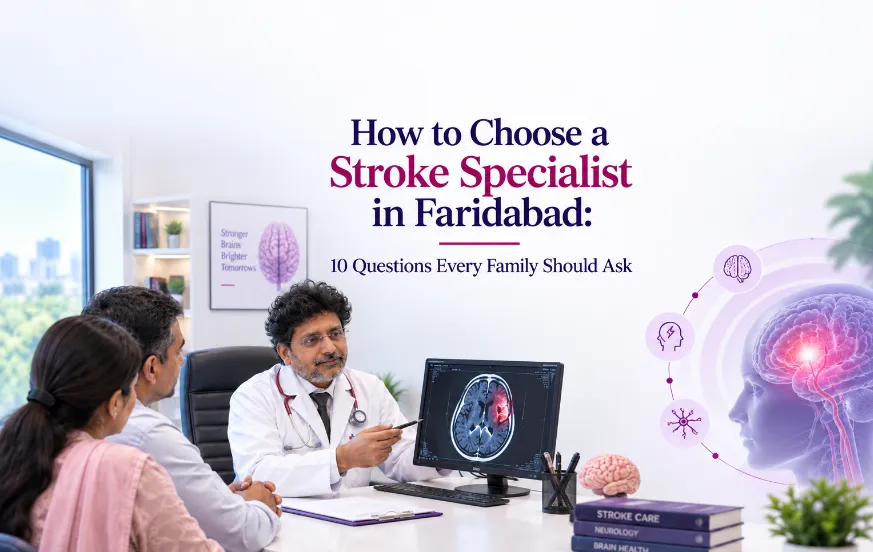
Posted By: Dr. (Prof.) Rohit Gupta on 14 Sep 2026
Stroke decisions are unlike most other medical choices families face, because there usually isn’t time to research and compare. If you’re reading this in a calm moment — planning ahead, or looking into care after a stroke has already happened — that’s exactly the right time to understand what matters in a stroke specialist in Faridabad.
Before Anything Else: Recognizing Stroke Symptoms
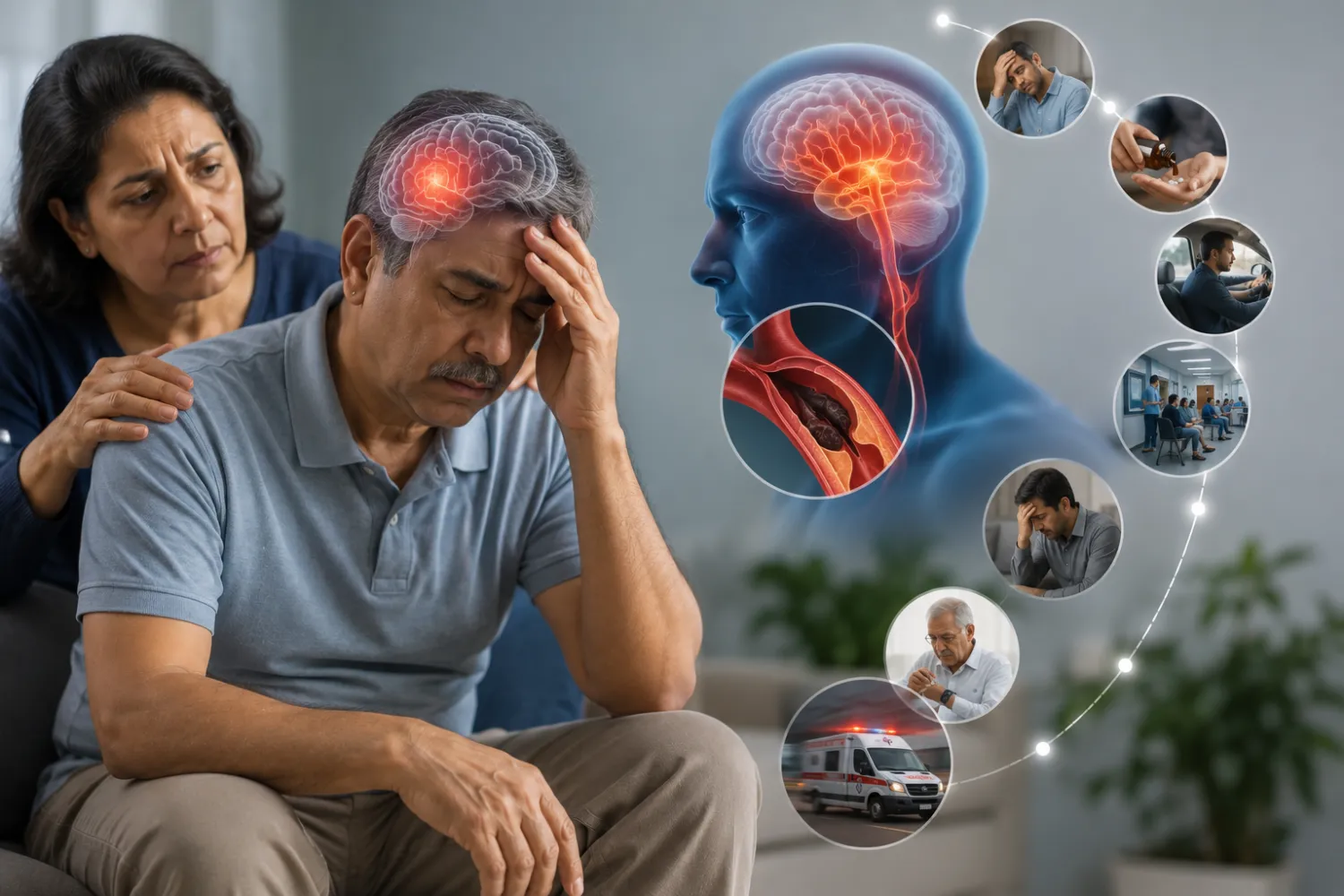
If you or someone nearby is showing signs of a stroke right now, stop reading and call for emergency medical help immediately. Use the FAST check:
- F — Face: Is one side drooping?
- A — Arms: Is one arm weak or drifting downward?
- S — Speech: Is speech slurred or hard to understand?
- T — Time: If any of these are present, it’s time to call emergency services immediately.
Also treat sudden numbness, sudden vision loss, sudden severe headache, or sudden loss of balance as an emergency. Do not wait to see if it passes, and do not spend time researching or comparing specialists in the moment. Stroke treatment is highly time-sensitive — this is worth repeating because it’s the single most important thing in this article.
With that said, here’s what matters when choosing ongoing stroke care.
Why Choosing the Right Stroke Specialist Matters
Stroke treatment quality depends heavily on two things: how quickly a patient reaches appropriate care, and how experienced the treating neurologist is with acute stroke management. A neurologist attached to a hospital with dedicated stroke infrastructure — imaging, thrombolysis capability, ICU support — offers a meaningfully different level of preparedness than a clinic without that backing.
10 Questions to Ask When Choosing a Stroke Specialist
1. What qualifications should a stroke specialist have?
Look for a neurologist with a DM in Neurology or equivalent DNB qualification, plus specific clinical experience managing acute stroke. Dr. (Prof.) Rohit Gupta holds a DM in Neurology from Seth GS Medical College and KEM Hospital, Mumbai, alongside over 20 years of clinical neurology experience.
2. Does the hospital have dedicated stroke-care facilities?
This matters enormously given how time-sensitive stroke treatment is. Ask whether the hospital offers on-site imaging (CT/MRI), thrombolysis capability, and ICU support for more severe cases. Dr. Gupta practices as Chairman – Neurosciences at Accord Superspeciality Hospital, Faridabad, which lists thrombolysis in acute stroke among its services.
3. How important is rapid stroke treatment?
Critically important. The effectiveness of treatments like thrombolysis depends on how quickly they’re administered after symptom onset — commonly referred to as the “golden hour.” This is precisely why any suspected stroke should go straight to the nearest emergency-equipped hospital rather than a scheduled appointment.
4. What should I look for in a stroke neurologist beyond the emergency phase?
Once the acute phase is managed, ongoing care matters too — a neurologist who explains the stroke type and cause clearly, builds a plan to manage risk factors like blood pressure and cholesterol, and coordinates rehabilitation referrals early rather than as an afterthought.
5. What happens during a stroke consultation?
Typically, a detailed review of symptoms and their timeline, a neurological examination assessing strength, coordination, and speech, a review of any imaging already done, and a discussion of the likely cause and next steps — whether that’s medication, further testing, or a rehabilitation referral.
6. When is stroke rehabilitation required?
Rehabilitation is often needed after a stroke that has caused any lasting weakness, speech difficulty, or coordination problems, and tends to be most effective when started early, once medically stable. This can include physiotherapy, speech therapy, and occupational therapy, depending on what’s been affected.
7. What should families ask after a stroke?
Useful questions include: what caused this stroke and what’s the risk of another one, what rehabilitation is recommended and how soon it should start, what changes are needed at home for safety, and what warning signs should prompt an immediate return to the hospital.
8. When should a suspected stroke be treated as an emergency?
Always — see the FAST checklist above. Any sudden facial drooping, arm weakness, speech difficulty, vision loss, or severe headache needs emergency care immediately, not a scheduled consultation.
9. How is stroke risk managed after recovery?
Ongoing management typically focuses on blood pressure control, blood sugar management for diabetic patients, cholesterol control, and lifestyle changes — usually an ongoing partnership between patient and neurologist rather than a one-time prescription.
10. Where can I consult a stroke specialist in Faridabad?
For non-emergency stroke follow-up, risk assessment, or second opinions, Dr. Rohit Gupta consults at Accord Superspeciality Hospital and his Sector 17 Neuro Clinic (details below). For an active suspected stroke, go directly to the nearest emergency room.
Why Patients Consider Dr. Rohit Gupta for Stroke Care
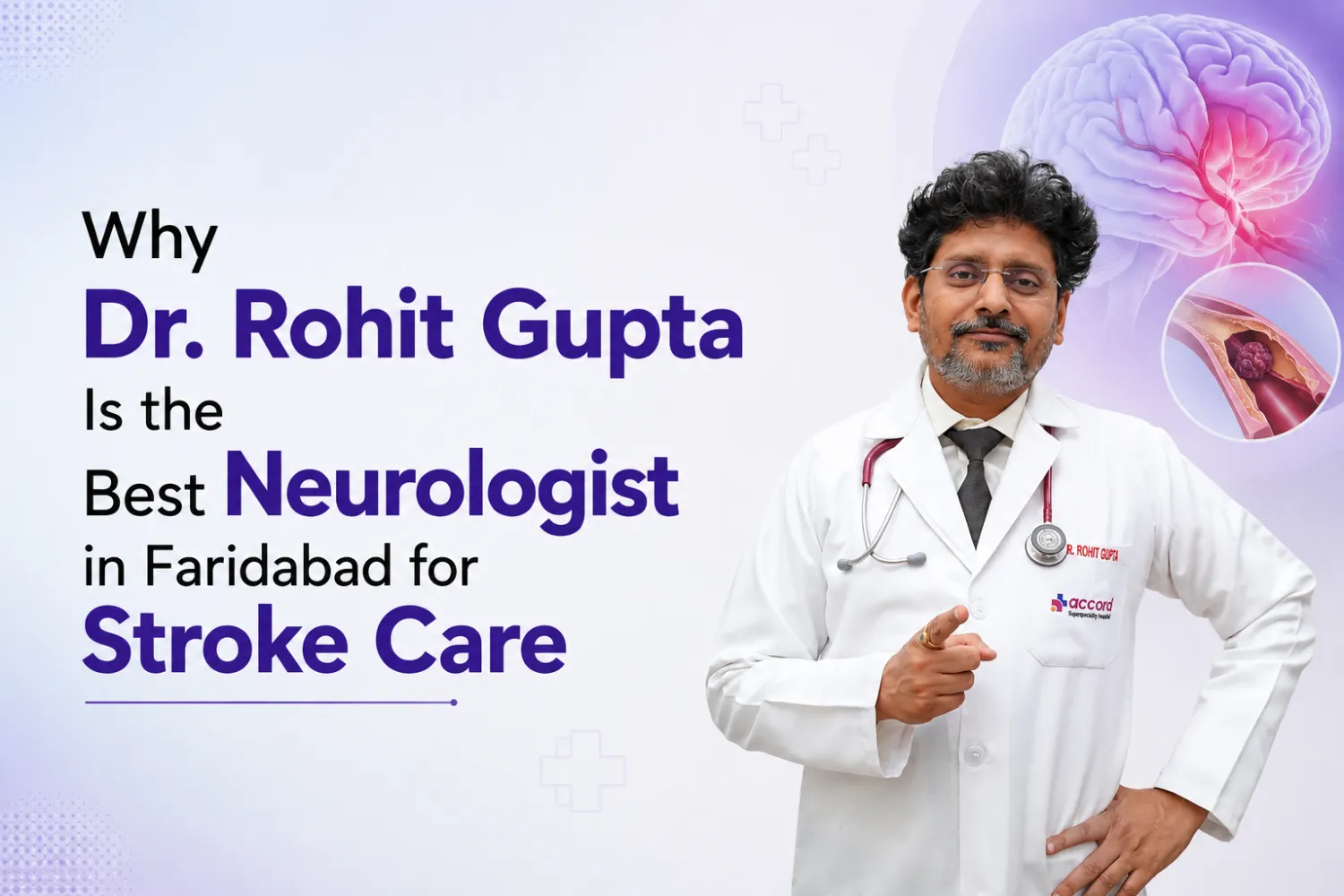
Dr. (Prof.) Rohit Gupta is Chairman – Neurosciences at Accord Superspeciality Hospital, Faridabad, with over 20 years of clinical neurology experience and a DM in Neurology from Seth GS Medical College and KEM Hospital, Mumbai. His practice includes stroke treatment and thrombolysis for acute stroke, alongside longer-term risk management and coordination for rehabilitation once patients are medically stable. You can review his full clinical background on his neuroscience services page before booking.
Frequently Asked Questions
What’s the difference between ischemic and hemorrhagic stroke? Ischemic stroke is caused by a blocked blood vessel restricting blood flow to the brain; hemorrhagic stroke is caused by bleeding in or around the brain. Treatment differs significantly between the two, which is why prompt imaging is essential.
Can a TIA (mini-stroke) be ignored if symptoms go away quickly? No. A transient ischemic attack (TIA) carries a meaningful risk of a full stroke following it and should be evaluated promptly, even if symptoms resolved on their own.
How soon after a stroke can rehabilitation start? Often within days, once the patient is medically stable — earlier rehabilitation generally supports better recovery outcomes.
Is stroke only a concern for older adults? No, stroke can affect younger adults as well, particularly with risk factors like high blood pressure, diabetes, or lifestyle factors — awareness shouldn’t be limited to older age groups.
Get Evaluated Without Delay
For non-emergency stroke consultation, risk assessment, or follow-up care, Dr. (Prof.) Rohit Gupta consults at:
Accord Superspeciality Hospital — Budena Village, Sector 86, Faridabad, Haryana 121002. OPD Timings: Monday–Saturday, 5:30 PM – 8:30 PM.
Neuro Clinic — SCO No. 91, Sector 17, Near Indian Bank, Huda Market, Faridabad. OPD Timings: Monday–Saturday, 10:00 AM – 5:00 PM.
Call +91-9718044428 or 0129-3512000, or book an appointment online.
If you suspect an active stroke, go directly to the nearest emergency room — do not wait for a scheduled appointment.
This article is intended for general informational purposes and does not replace individualized medical advice. If you suspect a stroke, seek emergency medical care immediately rather than referring to this article.


 Book an Appointment